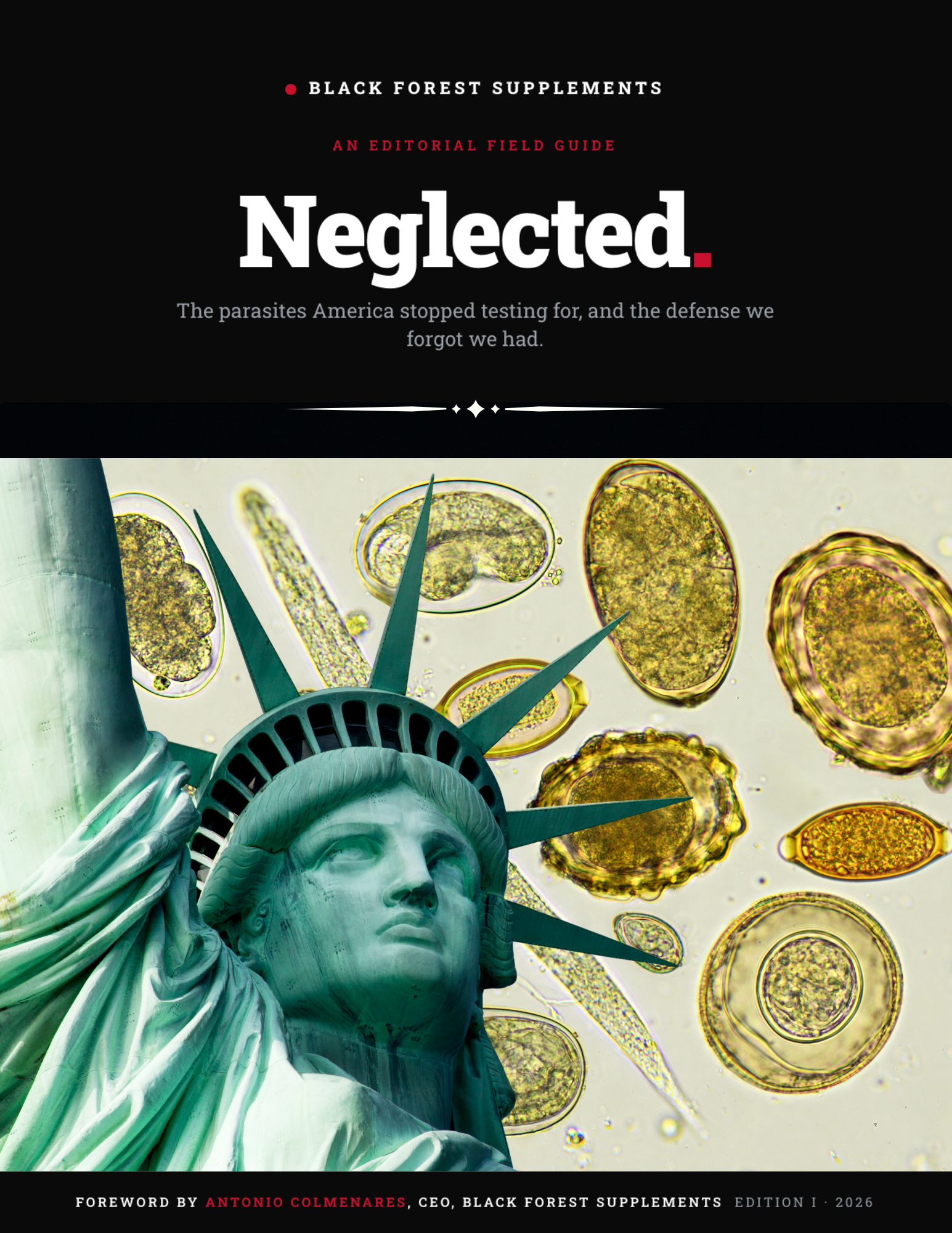
In 2014, the CDC did something it almost never does. It publicly named a group of parasitic infections as a neglected priority inside the United States, and admitted, in writing, that the doctors most Americans rely on "are often unfamiliar with these parasitic infections, and therefore may not diagnose or treat them appropriately."
That statement has sat in the public record for more than a decade. It did not change how the average annual physical is performed. It did not change what your doctor screens for at your next visit. Most people carrying one of these infections will live their whole lives without anyone ever looking.
This guide is what you would have been told, if the system that was supposed to tell you had been built to.
Neglected is the record of how the richest country on earth decided parasites were a foreign problem, what is actually circulating in ordinary American homes, kitchens, and backyards right now, why the medical system stopped looking, and what your own body is supposed to be doing about it but increasingly cannot.
It is also, in the second half, a list of moves you can make this week, with no help from us or any clinic, that measurably lower your exposure and support the defenses you already have. Free. Available now. No permission required.
What this guide is not is a sales document. We build formulas at Black Forest Supplements. We are not selling one here. By the last page you will understand more about how these infections spread, hide, and go uncounted than most of the people working inside the system that overlooks them. Whether you ever buy anything from us is a separate question, and an honest one.
Read the chapters in order; the argument builds. If a section names a number, the citation lives in Chapter 08, and the original source is one search away. Verify anything before you act on it.
Antonio Colmenares
CEO, Black Forest Supplements
To understand why America stopped looking for parasites, you have to go back to the one time it looked hardest, and won so publicly that it decided it never had to look again.
In 1902, a government zoologist named Charles Wardell Stiles identified a hookworm, Necator americanus, as a mass affliction of the rural South. The worm entered through bare feet, fed on blood in the small intestine, and left its hosts anemic, gaunt, and exhausted. The national press seized on it and gave it a nickname that stuck: the "germ of laziness." What had been written off as Southern indolence turned out, in a great many cases, to be a treatable infection (Cassedy, Bulletin of the History of Medicine, 1971).
In 1909, John D. Rockefeller put one million dollars behind the problem, creating the Rockefeller Sanitary Commission for the Eradication of Hookworm Disease. Over five years it attempted something the country had never tried at that scale: survey the South, treat the infected, and teach sanitation and shoe-wearing, county by county. When the Commission counted, it found that roughly 40 percent of the people it surveyed were infected (Elman, McGuire & Wittman, American Journal of Public Health, 2014).
And it worked. Infection rates fell. Privies were dug, shoes were worn, sallow children went back to school clear-eyed. It was a genuine, measurable public-health victory, and it deserves to be remembered as one.
Here is where the trouble began. A victory that decisive does not stay a fact. It becomes a story, and the story was simple: parasites were a problem of the past, of poverty, of somewhere else. The country had beaten them. It could stop thinking about them.
Except it had not beaten them, not entirely. In 2017, researchers from the National School of Tropical Medicine at Baylor tested stool samples in Lowndes County, Alabama. More than a century after the crusade, 34.5 percent of the samples still carried hookworm, in homes where raw sewage backed up onto the ground (McKenna et al., American Journal of Tropical Medicine and Hygiene, 2017). The worm never left. The country just stopped looking at it.
That is the pattern this whole guide is about, and the CDC finally named it out loud in 2014. When it launched its Neglected Parasitic Infections initiative, it did not describe diseases that had vanished. It described diseases that had been overlooked, and it put its finger on exactly why. The single greatest obstacle, the CDC wrote, is "the perception that parasitic diseases are no longer relevant or important."
Read that twice. The nation's top health agency was stating, on the record, that the biggest barrier to finding these infections is the belief that they are not there. A crusade that ended in 1914 had become a blind spot still turning patients away in 2014. The chapters ahead take that machinery apart, piece by piece, starting with what is actually here.

The CDC named five parasitic infections as neglected priorities in 2014. They are not rare, and they are not foreign. Here is what they actually are, and where they live.
Toxoplasma. A single-celled parasite that reproduces in cats and spreads through their feces, undercooked meat, and unwashed produce. Once inside a person it can cross into the brain and muscle and form cysts that persist for life. More than 40 million Americans are estimated to carry it, most with no idea.
Pinworm. A small white worm that lives in the intestine. At night the female migrates out to lay thousands of eggs on the surrounding skin, which is the source of the itch, and the eggs spread on hands, bedding, and doorknobs. An estimated 40 million Americans carry it, the most common worm infection in the country, concentrated in households and classrooms.
Toxocara. The roundworm of dogs and cats. People, usually children, swallow its eggs from contaminated soil; the larvae then wander the body, and in a small number of cases migrate into the eye or the brain. National surveys have found antibodies in roughly one in seven Americans.
Trichomoniasis. A protozoan, and the most common curable infection of its kind, about 3.7 million cases, usually with no symptoms at all.
Chagas. Caused by a parasite spread by the "kissing bug," it can live in the body silently for decades before scarring the heart. More than 300,000 people in the US carry it. Giardia, the most commonly diagnosed intestinal parasite in the country, did not even make the list.
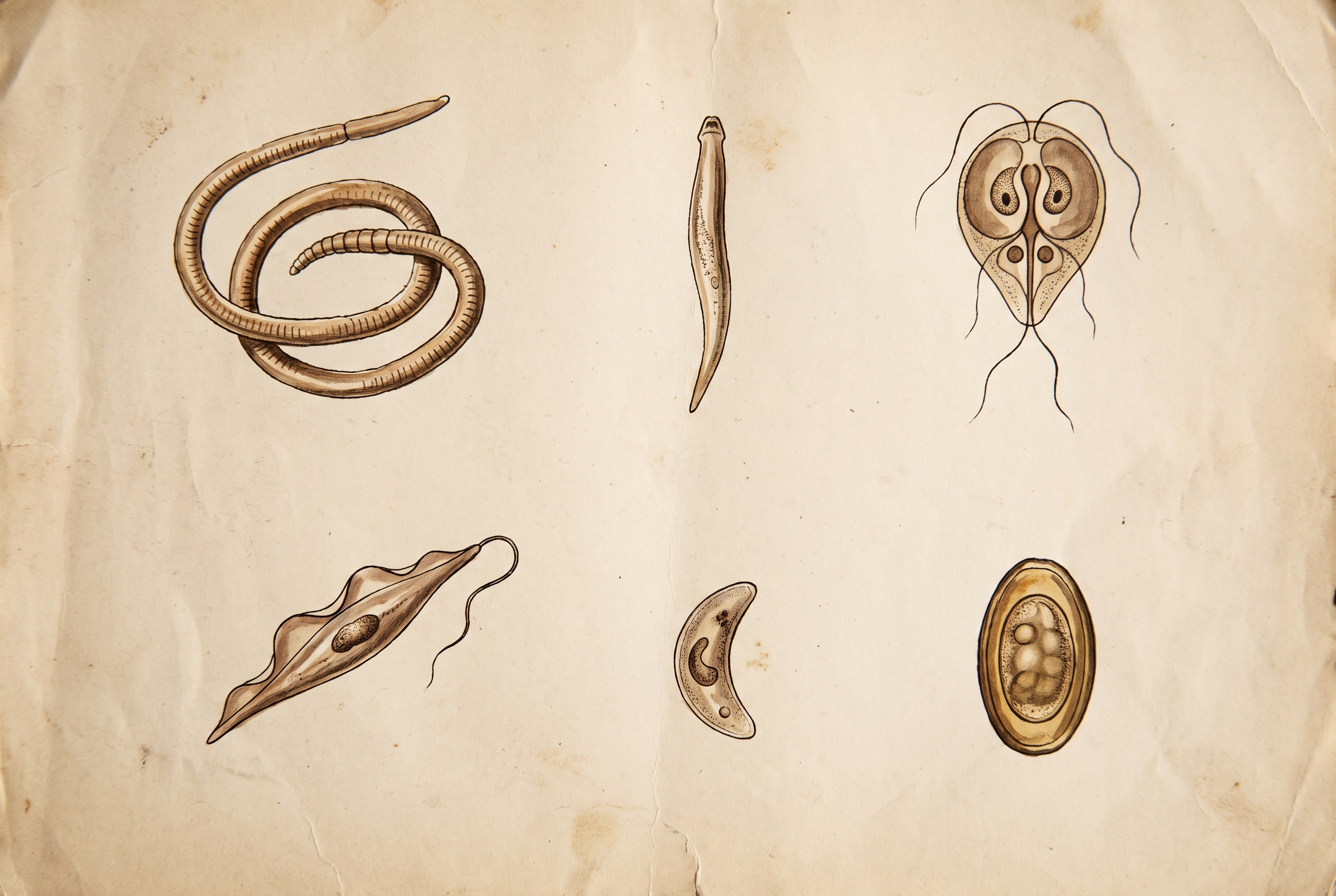
Here is the part that rarely reaches an exam room, let alone a patient. These infections are not always silent passengers. A body of peer-reviewed research, largely ignored in routine care, links some of them to measurable effects on the brain.
Toxoplasma and behavior. Over two decades, researchers led by Jaroslav Flegr have reported that people carrying latent Toxoplasma differ from uninfected controls on standardized personality measures and show slower reaction times. One prospective study of nearly 4,000 subjects found infected individuals at significantly higher risk of a traffic accident (Flegr, Journal of Experimental Biology, 2013). These are associations, not settled cause, and they remain debated. That they are barely mentioned in ordinary care is the point.
Toxocara and children's cognition. Using a nationally representative US sample, Walsh and Haseeb found that Toxocara-seropositive children scored significantly lower on measures of attention, reasoning, and academic achievement than seronegative children, even after controlling for socioeconomic status, lead exposure, and other factors (Walsh & Haseeb, International Journal for Parasitology, 2012).
None of this is fringe. It is published, peer-reviewed, and sitting in the same literature the system draws on for everything else. It simply does not travel, because no one is looking for it.
If a parasite outbreak still sounds like something that happens on another continent, consider the last decade inside America's most trusted brands.
Food is only one door in. Cryptosporidium, the leading cause of waterborne outbreaks in the country, shrugs off pool chlorine and surfaces every summer in public pools and children's splash pads; the CDC counted roughly 7,500 illnesses from it in a single recent decade. The roundworm dogs leave in the grass seeds the soil of parks and playgrounds, where surveys have found its eggs in anywhere from a sixth to three-quarters of the samples tested.
Every one of those numbers is only what got counted. Hold that thought. It is the subject of the next chapter.

The infections in the last chapter are not hidden in a vault. They are hidden in plain sight, by a loop that runs quietly and guarantees the truth stays off the books.
It works in six steps.
This is why the CDC can call these infections underdiagnosed and underreported in the same breath. The confirmed cases are not the disease. They are the fraction that survived a system built, without anyone intending it, to look the other way.
And this part matters: none of it is your doctor's fault. Your doctor was trained inside the loop, practicing exactly the medicine they were handed. The failure sits upstream, with whoever decides what gets studied, taught, and paid for. Which raises the only hopeful question left. If the system will not defend you, what will? The answer, it turns out, is something you already own.
Before any pill, any clinic, any test, the human body runs a layered defense against the organisms it swallows, breathes, and touches. It has been running it the entire time. Most of what you are exposed to never establishes anything, because the defenses catch it first.
Understanding those layers is the whole point of this chapter, because you cannot support a system you do not know you have.
The stomach holds its contents at a strongly acidic pH, often between 1.5 and 3.5. That acid is not only for digestion. It is a chemical checkpoint that denatures proteins and disables or kills many of the organisms arriving on food and water before they ever reach the intestine. When that acid is blunted, the checkpoint weakens, a thread the next chapter picks up.
Past the stomach, the gut lining is not a passive tube. It is coated in a mucus layer, sealed by tight junctions between cells, and patrolled by secretory immunoglobulin A, or sIgA, an antibody the mucosa secretes to bind and neutralize invaders before they can attach. A healthy mucosal barrier is one of the body's busiest immune organs.
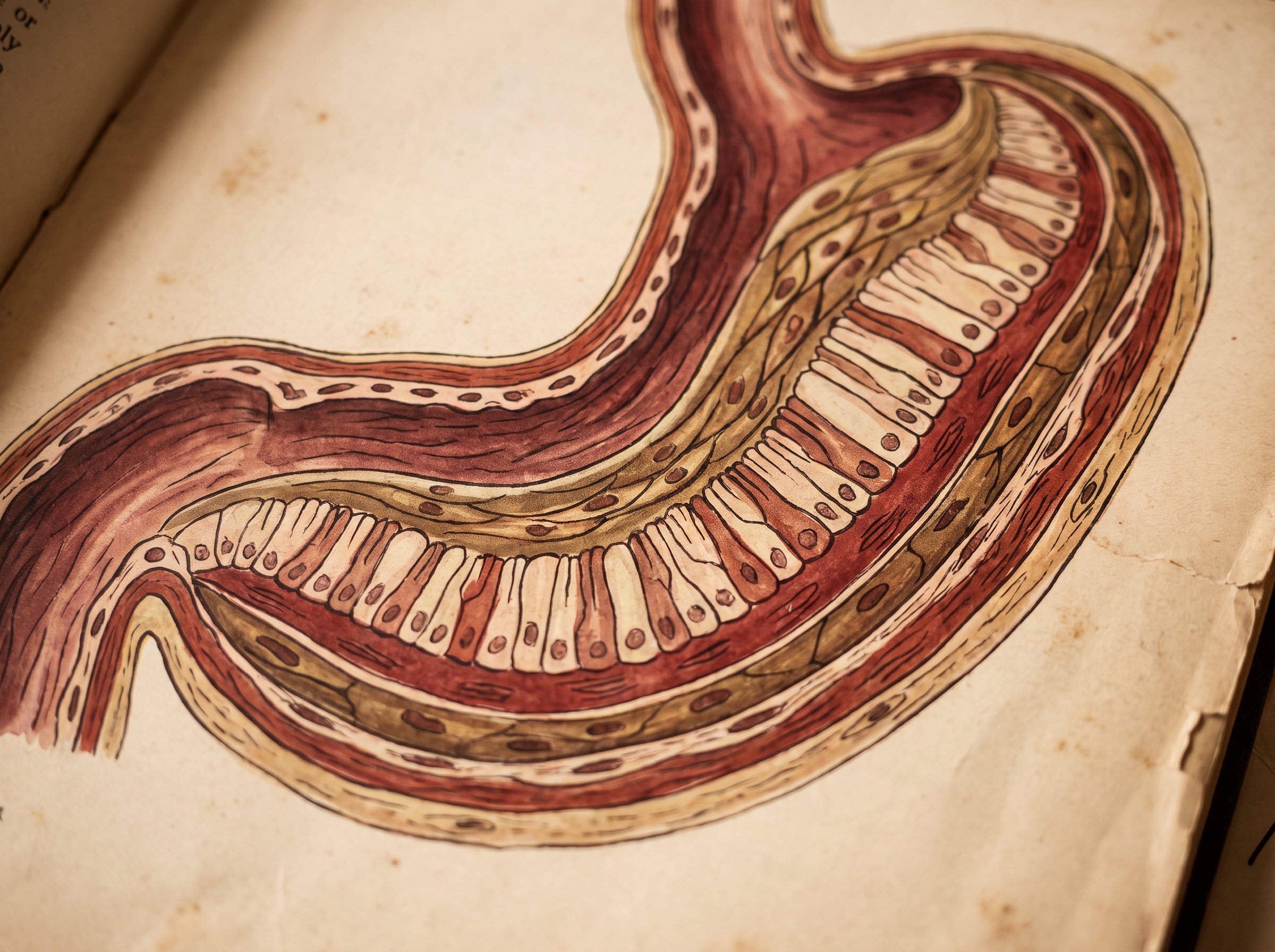
Bile acids, released to digest fat, also carry antimicrobial activity that helps keep the small intestine's organism load in check. And beyond the body's own chemistry there is the microbiome: a dense resident population that competes for space and nutrients and makes it physically harder for an incoming organism to gain a foothold. Microbiologists call this colonization resistance. A crowded, diverse gut is a defended one.
Against larger parasites, the body deploys a specialized branch of immunity, rich in eosinophils and mast cells, evolved specifically to recognize and expel worms. It is one of the oldest arms of the immune system, and in most healthy people it works so well that an exposure never becomes an infection.
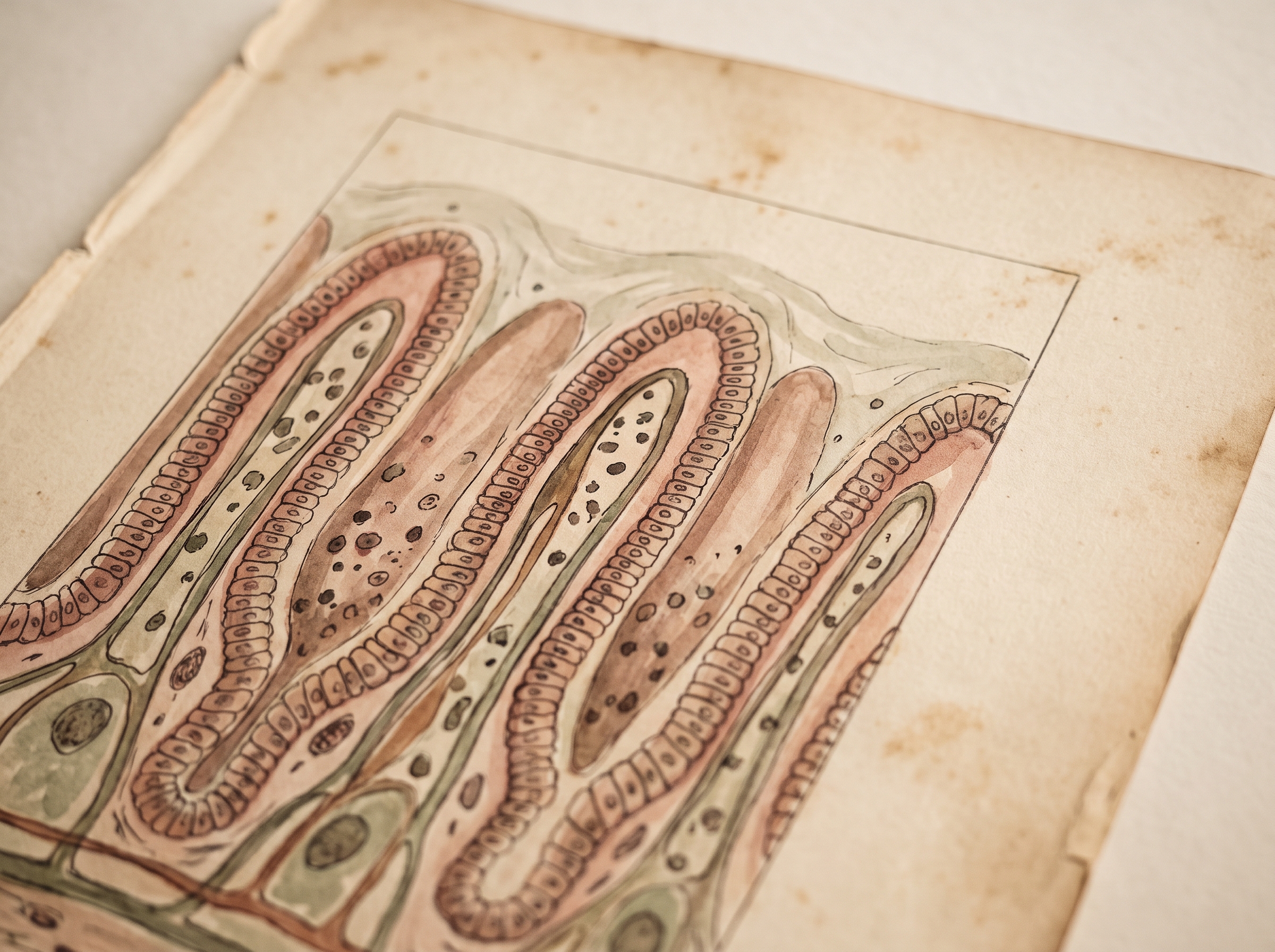
Stack these together, acid, mucus, sIgA, bile, colonization resistance, and the anti-parasite immune response, and you have a defense that is genuinely formidable. The question this guide keeps circling is not whether you have it. You do. The question is whether modern life has worn it down.
For almost all of human history, people did not simply hope their defenses would hold. They reinforced them, daily, through food.
Nearly every traditional cuisine on earth built bitter, pungent, and fermented foods into the everyday diet, not as medicine reached for once someone was already sick, but as a standing habit meant to keep the terrain hostile to unwanted organisms. Bitter greens and herbs. Raw alliums like garlic and onion. Warming spices. Fermented preparations carrying live cultures. The specifics differed by region. The instinct was universal.
They took it seriously because they had no choice. They lived close to their animals, their soil, and their food, with no test to run and no comforting story that the problem had gone away. The habit was the defense. And modern research is now, quietly, circling back to those same foods, studying the compounds in them and how they affect the gut, the microbiome, and the body's own defenses. The name of the single food the ancient world trusted above all the rest is a story for another day.
There is an obvious objection to all of this, and it deserves a straight answer. If traditional life was so well defended, why did those people die younger? US life expectancy has climbed from about 47 years in 1900 to nearly 79 today. Did we not clearly improve on the old ways?
We did, but not in the way most people assume. Almost all of that gain came from a single place: we stopped dying young. The death rate from infectious disease fell roughly 90 percent between 1900 and 1950, accounting for about two-thirds of the entire drop in mortality, while infant mortality fell from around 100 deaths per 1,000 births to under 30 in the same span (Guyer et al., Pediatrics, 2000, from CDC/NCHS data). Clean water, sewage systems, safer milk, and later antibiotics and vaccines saved the young. That is the real and enormous victory of modern medicine, and it is worth being clear-eyed about it.
What that victory did not do was make the modern diet healthier than the traditional one. As infectious death receded, chronic, diet-driven disease moved into its place as the leading cause of death. We did not out-innovate the old table. We out-innovated the infections that used to kill people before chronic disease had the chance.
On the narrow question this guide is about, keeping the body's everyday defenses strong, the traditional habit was not primitive. It was doing something real that we quietly stopped doing. The next chapter is why, for most modern Americans, both the defenses and the habit have eroded at once.

The defenses in the last chapter are the ones our grandparents had. What changed is not the body. It is nearly everything we ask the body to handle, and for each change there is now research to show it.
The bitter, pungent, and fermented foods that reinforced the gut for millennia have been engineered out of the modern diet. Ultra-processed foods now make up an estimated 57 percent of the calories Americans eat (Steele et al., BMJ Open, 2016), and they are built for shelf life and palatability, not for the living cultures and bitter compounds the old diet delivered every day.
Acid-suppressing drugs are among the most widely used medications in the country, taken by millions, often for years. They have their place. But at standard doses they nearly abolish the gastric acid barrier, and a systematic review found that suppressing that acid is associated with a significantly higher risk of intestinal infections, including Salmonella, Campylobacter, and C. difficile (Bavishi & DuPont, Alimentary Pharmacology & Therapeutics, 2011). The first gate from Chapter 04, chemically stood down.
Colonization resistance depends on a dense, diverse microbiome. Both repeated antibiotic courses and low-fiber, ultra-processed diets erode it: antibiotics thin the resident population that crowds out invaders, and fiber deprivation drives the microbiome to degrade the protective colonic mucus layer itself, raising susceptibility to intestinal pathogens (Desai et al., Cell, 2016; reviewed in Frontiers in Cellular and Infection Microbiology, 2021).
Chronic stress is associated with lower secretory IgA, softening the mucosal defense at the very moment modern life raises exposure. The food supply travels farther, and through more hands, than any in history. More pets share more beds. And the daily habit of protective foods, the one every traditional culture kept, is simply gone from most kitchens.
If the defenses have eroded, why isn't everyone sick?
Because the defenses are layered and redundant. You can lose one and lean on the others, which is exactly why the erosion is so easy to miss. No single change tips a person over. It is the accumulation, a blunted acid gate here, a thinned microbiome there, a diet stripped of the foods that used to help, that quietly lowers the whole system's margin. This is also why the effect shows up as a population trend, not a personal alarm bell: more exposure meeting less resilience, spread across millions of people who each feel individually fine. The point of this guide is not that you are defenseless. It is that the margin is thinner than it was, and that most of it is recoverable.
None of this is a counsel of despair. Every one of these erosions has a countermove, and not one of them requires a prescription. Some of the most effective are things you can start at your next meal. That is the next chapter, and it is the one to read with a pen.
Nothing in this chapter requires a prescription, a product, or a clinic. It is the layer of defense every reader has direct access to today. The goal is modest and defensible: lower your exposure, and support the native defenses from Chapter 04.
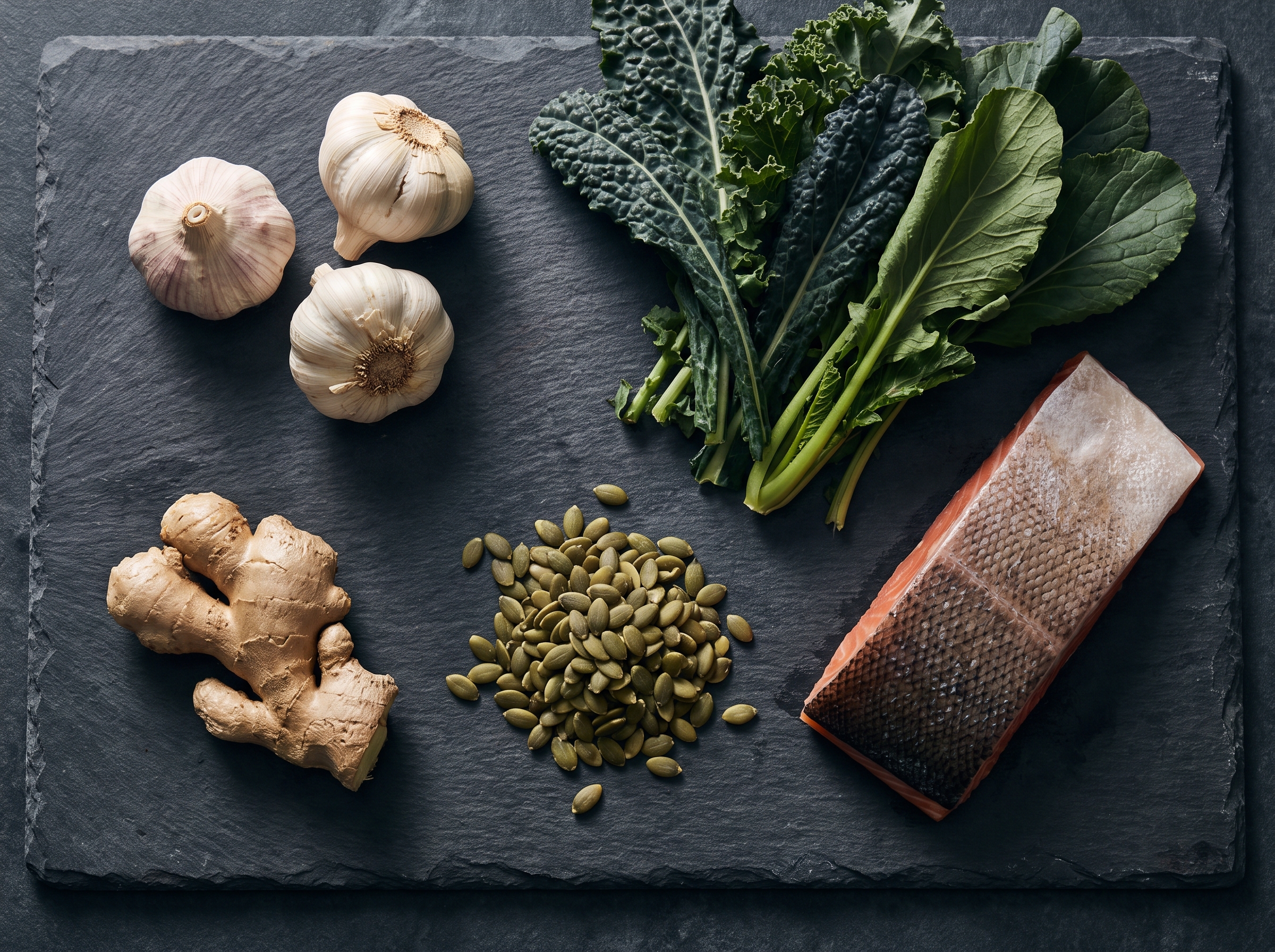
Chapter 04 described what traditional cultures ate on purpose. You can put it back: bitter greens, raw garlic and onion, warming spices, and fermented foods carrying live cultures, alongside the fiber that feeds the microbiome that provides colonization resistance. This is a dietary pattern, not a cure. It is how you keep the terrain defended.
Most annual physicals screen for none of this. These are inexpensive, widely available, and answer questions a standard panel cannot. Ask by name.
What if my doctor waves it off?
Some will; a growing number will not. Keep the request specific and bounded: name the test, note your exposure (pets, travel, raw fish, well water, symptoms), and ask what their threshold is for ordering it. If you are dismissed on reflex rather than on substance, a second opinion is reasonable. You are not asking for anything exotic. You are asking them to look.
This is the layer you own today. The next chapter is the one you do not, and it is where most people get taken advantage of.

Everything in the last chapter matters. Cooking, hygiene, the old foods, the tests. For most readers, most of the time, that layer is enough. But it is a floor, not a ceiling, and it is fair to ask what sits above it.
The moment you ask, you meet the "parasite cleanse" aisle. It is worth being blunt about what that aisle is.
The category is largely unregulated. Products routinely make claims they are not allowed to make, and the FDA has issued warning letters to sellers of "parasite cleanse" products for marketing them as treatments for disease, which is not a claim a supplement is permitted to make. Formulas are often harsh, wildly variable between brands, and sold on fear rather than on anything verified. A shelf built on unproven promises is not a step up from the free layer. It is a detour.
So let us draw the line plainly, because it is the most important sentence in this guide. No food and no supplement, legally or honestly, is a treatment for a diagnosed infection. If you suspect you have one, the move is Chapter 06: get tested, and if something is found, it is treated by a physician. Full stop.
What a well-made botanical can honestly do is different, and quieter. It can support the terrain the earlier chapters described, the gut, the microbiome, and the body's own everyday defenses, as part of the standing habit that traditional cultures never abandoned.
Hold those two ideas together, the honest boundary and the traditional habit, and the shape of the missing piece comes into focus. Not a "cleanse." Not a promise to kill anything. A real version of the food the old world trusted most: standardized so every dose is the same, independently verified so the label is true, and made for what it supports rather than what it claims to cure.
That is a specification, not an advertisement. If someone is shipping that, it deserves a careful look. If we are, we will tell you in plain language, and soon.
If you have read this in order, you know more about the shape of this blind spot than most people walking around inside it. You know how the country stopped looking. You know what is actually here. You know why the system misses it, and why that is not your doctor's fault. You know the layered defense you were born with, why it has eroded, and exactly what to do this week to lower your exposure and support it. And you know why the shelf of easy answers is not one.
The last thing worth knowing is the name of the food itself, and the strange, buried history of how a remedy the ancient world swore by was nearly forgotten. That is the next thing I want to show you.
Antonio Colmenares
CEO, Black Forest Supplements
The claims in this guide are drawn from public health agencies, peer-reviewed journals, and government food-safety standards. Where a chapter states physiology as established (Chapter 04), it reflects standard medical and microbiological understanding rather than a single source.
You now know what is here, why almost no one counts it, and the layered defense your body was built to run, the same defense every generation before us fed on purpose.
So we went looking for the one thing the old world reached for above all others: an ancient seed, bitter and black, once called a remedy for everything but death. And we studied what modern laboratories are quietly rediscovering in it.
Then we started building something around it. Not another fear-based cleanse, but the real thing, judged the way the ancients would have, standardized and verified for what it genuinely supports. It may be the most important formula we have ever made.
Keep your eyes on your inbox. In the coming days I will show you the seed, the buried history behind it, and what we built. Do not miss the next email.